Showing posts with label first grade. Show all posts

Sunday, January 10, 2016

Happy New Year!

 We've had a blast this past week with parachute in upper elementary.  (Next week will be lower elementary's turn!)  Lower elementary students continued working on the overhand throw in centers.  One center was throwing with me, where I worked with each individual student.  Other centers included hula hoop, bean bag toss, exercises, and bowling.

Ms. Caballeros and Ms. Cech's classes have been enjoying new visual schedules, and one new element to our routine:  stretches!  We've also continued working on striking skills with tball.  Ms. Addison's class continues to work on individualized activities for each student, along with bowling and tball, too!

First grade health classes finished our fire safety review booklets.  Students can feel free to finish coloring their work at home.  Have your student show you the booklet and tell you about fire safety!

First graders working on fire safety review booklets
Parachute version of sharks and minnows
Inflation!  

Big giant bubble, right in front of them!


Color switch:  students walk with the parachute, jog to the next spot of their same color when called

Shake it!  

Sharks and minnows

Popcorn!  


Wednesday, October 28, 2015

PHOTO: Fitness Logs Bulletin Board

Last week in our first grade health classes, students were asked to keep a fitness log of their physical activity for one week.  (See the blog post for more information!)

Here is the bulletin board showing everyone how active we are!!  First grade families, if you haven't sent your activity log with your student in to the classroom, please send it in and it will be added to the bulletin board.


Tuesday, October 20, 2015

Week of 10/19/2015: First Grade Health

Activity Log:  A sheet will come home today (Monday 10/19) or tomorrow with first grade students.  One side is our "Pulse Fair" (experiment) side (see below for description).  Students recorded their pulse fast or slow for our different activity levels today.  On the other side is an activity log.  Please help your first grader fill out this activity log until next Tuesday, October 27.  Bring it to school that day!  We'll post the returned activity logs on a bulletin board to show the whole school how active we are!  

Mrs. Stoops' example activity log
Here is a blank activity log!
Monday's lesson included a discussion of pulse.  We started with what it is -- heart pumping and making arteries, tubes that carry our blood, expand.  We then talked about how our hearts pump faster and harder when we are active, because our muscles need more blood and oxygen when we are moving around.  Because our hearts beat faster, our pulse is faster when we are active!

We then talked about the two most common places to find our pulse, wrist and neck.  We then went over directions for how to check pulse for each place, and each student tried to find their pulse in  both locations.  I helped many students find their pulse on their wrists!

Then, our experiment part of the class:  we first checked our pulse when sitting.  Students felt their own pulse and decided if it felt fast or slow, and then wrote a F for fast or S for slow on their paper.  We then ran in place, stopped to feel our pulse, and students marked F (fast) or S (slow).  Then we rested and felt our pulses again at rest, followed by another bout of activity (jumping jacks, hopping, jumping, scissor jumps, and more!) and another pulse check.

The experiment reinforces that our pulse increases when active, and decreases when resting.  We will check our pulses throughout the school year, with more relative conclusions like we used today (fast, slow, medium) instead of numbers.

We also discussed why it is important to be physically active, how experts recommend 60 minutes of activity every day for children, and how things we do everyday at school do help count toward our activity time (PE class, activities at recess, during music class, etc.).

Example pulse experiment chart.  This is not homework, as we completed it together in class.  If your student was absent, you could try the experiment at home!  


Friday, October 16, 2015

Week of October 12, 2015: 1st Grade Health

Our new unit is Nutrition and Physical Activity!  This week we talked about the food groups, and how they can help us make good nutritious choices.  Students learned how healthy snacks are also important.  Our students enjoy such healthy snacks!!  Carrots was a very popular item, along with other vegetables and fruits.  We also talked about what physical activity is (moving parts of our bodies and making our hearts beat faster), and why it's important.  We learned there are three main benefits to physical activity:

  • Flexibility:  when we are active, we encourage flexibility - especially when we stretch after an activity.  Healthy muscles are flexible.  Like a rubber band, we want our muscles to be stretchy so they don't tear or break.  
  • Strength:  activity can help make our muscles stronger, making it easier for us to move and lift things.  Our heart is a muscle, too, and gets stronger and more healthy when we are active!  
  • Endurance:  activities can help us move and play longer without being tired.  
Next week, we'll talk about our pulse and learn how to check it.  Students will also get an log to keep track of physical activities for one week.  I plan to post the ones returned on the bulletin board outside of the gym!  

Week of October 12, 2015: Y5-2

Bean Bags!!  Young Fives, Kindergarten, first, and second grades worked with bean bags this week.  Similar to our hula hoop lessons, activities focus on movement and space awareness, eye-hand coordination/tracking, and having fun.  We call our beanbags "Beanie".  Activities included many of the following prompts:  

  • How many different parts of your body can you balance Beanie?  (Head, forehead, shoulder, fingers, elbow, tummy, back, knee, foot...)
  • Stand with Beanie balanced on your head - lower to knees, and then sitting, trying not to let Beanie fall off, without touching it with hands.  
  • Take Beanie for a walk on your arm/shoulder/head/back of your hand.  
  • Put Beanie on your spot.  stand in front, behind, to the side, on the other side.  Jump forward/backward over Beanie.  Jump side to side over Beanie.  Hop on one foot around Beanie.  
  • Build a bridge over Beanie.  Four parts, three parts.  
  • Statue:  Move around the room to the music.  When the music stops, put your foot on the closest Beanie and make a statue.  (Gallop, skip, hop on one foot, jump on two feet, sideways slide-step).  
  • Beanbag Freeze:  Balance Beanie on your head.  Walk around the playing area without touching Beanie, being careful to not let it slide off.  If Beanie falls, you're frozen.  Others still balancing their Beanie can carefully bend down to pick up your Beanie and hand it to you.  Say Thank you! when someone helps you, and be a helper to others!  
  • Beanbag Signals:  My voice signals different activities with Beanie.  
    • "Toss and walk":  Toss beanie up and catch, while walking around the playing area.  Gallop, skip, sideways slide-step can also be substituted for walk.  
    • "Freeze!"  Let Beanie fall to the floor and make a statue on it. 
    • "Leap!"  Leave your Beanie, leaping over as many other Beanies as you can. 
    • "Jump!"  Jump side to side over your Beanie. 
    • "Hop!"  Hop in a circle around your Beanie. 
    • "Bridge!"  Make a bridge over your Beanie. 
  • Toss and catching tasks: 
    • Toss and catch, using your favorite hand, catching with two hands. 
    • Use your other hand, catch with two hands. 
    • Toss with one hand, catch with the same hand.  Other hand. 
    • Toss with one hand, catch with the other hand.  ("Rainbow tossing")
    • Toss Beanie up, clap once, then catch it.  Can you clap twice before catching Beanie? 
    • Can you toss Beanie, touch your shoulders, then catch it? 
Activities adapted from Landy and Landy, Ready to Use PE Activities for Grades K-2, 1992.  

Friday, October 2, 2015

1st grade health: Social and Emotional Health

In first grade health, we are working on our Social and Emotional Health unit.  We have learned:

  • How family members and friends build relationships by listening and helping one another
  • How to predict the potential feelings of others and how to find out how others feel
  • How to use interpersonal communication to enhance health, including courteous communication, recognizing and expressing feelings, listening, compliments, and appreciations
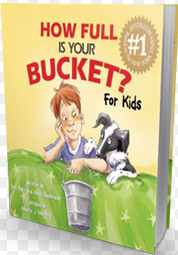
We read the book How Full is Your Bucket? by Tom Rath.  The book shows students that we all have a "bucket" with our positive, good feelings.  We fill our own bucket AND others' buckets when we do kind, thoughtful, caring things for other people.  We empty our own bucket and take from others' buckets when we do unkind things.  


Students brainstormed a wonderful list of ways we can help at home and with friends.  Students were given a piece of paper and asked to draw themselves helping at home or helping a friend.  Here are some of their drawings.  Look for your student's sheet to come home today or Monday!  

Helping someone who is hurt

Helping do the dishes

Helping set the table

Helping with cooking

Helping by playing with a younger sibling

Helping with dishes

Helping with dishes

Setting the table

Helping someone who has dropped a pile of papers

Helping carry things

Helping clean the house
For the rest of this health unit, we'll learn how to use a decision making model to help guide our  choices.  

Wednesday, May 20, 2015

Health: Medicines and Poisons

First graders and kindergarteners are now learning about medicines (K and 1), poisons (K and 1), and tobacco (1st grade only).

Medicine:  Both grade levels started out discussing rules for using medicine.  We discussed how medicines can help us in many ways, but when not used properly, medicine can hurt us very badly.

Rule for medicine:  Medicine should ONLY be used when given to us by a trusted adult.  Medicine should never be shared without a trusted adult's permission and help.  Never take more medicine than a trusted adult gives or says to take.  

Drugs:  We talked about how the word "drug" doesn't always mean something bad.  A drug is anything we put into our bodies, other than food, that changes the way we think, feel, or act.  Drugs change the way our bodies work.  Medicines (cough syrup, tylenol, allergy medicine) are drugs, too.

Poisons:  We then discussed poisons, and how poisons are all around -- in the garage, kitchen, bathroom, and more.  Medicines, if not used properly, can be poisonous to our bodies.  Household cleaners and chemicals, while useful for cleaning or fixing things around the house or yard, can be poisonous if they get into our lungs/eyes/bodies.

Rule for poison:  If you aren't sure something is safe, don't sniff, taste, swallow, or play with it.  

For parts of these lessons, students saw pictures of examples of each type of substance (medicines and poisons) and we talked about safety rules.  Each lesson also had some practice questions/scenarios we discussed.  

Health: Safety

Over the past couple of weeks, we have been covering safety in kindergarten and first grade health.  Lessons are different based on their grade level, but cover the same basic concepts.  Last time I posted on the blog about health lessons, we were discussing fire safety and safety when moving around and on wheels.  We have since moved on to personal safety.  Personal safety is:

  • Following safety rules
  • Being aware of what is going on around you
  • Taking safe action in situations that could be dangerous, destructive, or disturbing
  • Asking for help when it is needed
Both grade levels discussed a rule for telling right away:  if something is Dangerous, Destructive, or Disturbing.  Those are what we refer to as our "3 Ds of Telling".  That means if something fits one of those words, we tell a trusted adult right away.  We discussed examples of trusted adults, and students came up with extensive lists of adults they can trust in these types of situations to help.  Some situations are so serious that they are considered emergencies.  Emergencies are when someone needs the help of a doctor, firefighter, or police officer RIGHT AWAY.  We talked about when to call 911 and why it's important to know how to call.  

We also discussed good touch and bad/confusing touches, and how to stay safer from bad touch.  The Michigan Model of Health outcomes for this area of our curriculum are: 

  • Students will comprehend concepts related to appropriate and inappropriate touch.
  • Students will demonstrate strategies to avoid personally unsafe situations and to get away in cases of inappropriate touch or abduction.
  • Students will demonstrate the ability to ask a trusted adult for help.
We watched a video related to this topic, and also had a class discussion about these issues.  Students did a great job listening respectfully and actively participating in our lessons about these serious and extremely important topics.  

Sunday, November 30, 2014

1st Grade and K Health: Week of 12/1

First grade and kindergarten families, look for Family Resource Sheets in backpack mail later this week about our upcoming Nutrition unit!  We'll play with food models, talk about the major food groups, and why good nutrition is important.

Some quality nutrition resources include:

Choose My Plate  (Replaces MyPyramid)

For Kids:
CDC BAM!  (Body and Mind)
KidsHealth


Monday, October 20, 2014

PE/Humanities - Health!!

First grade and kindergarten students have been working hard during their PE/Humanities - Health time in the gym.  We have been learning about social/emotional health, including how to have positive relationships with others, and learning about feelings.

First grade students illustrated how they are good helpers at home and at school.  Kindergarten students created a coupon booklet for a special adult at home.  Each coupon can be redeemed for a job around the house, such as making a bed or helping with laundry.

First grade students illustrating how they help others at home and at school.